Drama
A work meant to bring on an emotional response, such as instilling sadness or tension. Novels that often show life or characters through conflict and emotions. In general, the different parts of the story tend to form a whole that is greater than the sum of the parts. In other words, the story has a message that is bigger than just the story line itself
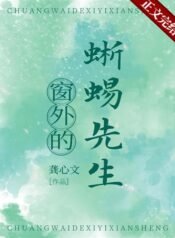
In a stormy, rainy night, Banxia takes in a small, battered lizard that crawled into her house through the window. To care for it, she accidentally spends all her savings, nearly leaving herself without breakfast the next morning.
From then on, every morning, she is astonished to find her home spotless and a steaming hot breakfast waiting on the table.
One day, the magical little lizard suddenly disappears. Worried, Banxia ventures into the rain to search for it, only to find a drenched man in a bamboo grove, scales still visible on his ankles.
The man lies in pain among the bamboo leaves, covering his face with pale fingers, his voice low and trembling, “Don’t come near me. Don’t look at me…”
Banxia respects his words and stays by his side, shielding him from the storm all night with her umbrella.
She doesn’t want to see him weep in winter’s cold again. She cannot bear to let him flee, scarred and broken, into a lonely world. In a world where true understanding is rare, without him, no one else could stand by her side.
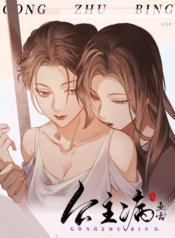
Miss Chi’s view of Miss Jing: A vixen nouveau riche.
Miss Jing’s view of Miss Chi: A money-grubbing gold digger.
After an unexpected incident, their perspectives on each other begin to change…
A love story of two women who are tsundere for each other, gradually developing feelings through physical intimacy.
Morning, a certain hotel, the presidential suite’s large bed…
Chi Jia gets dressed: “Jing Rui, even if all the men and women in the world die, I still wouldn’t look at you!”
Jing Rui: “Please, Miss Chi, remember what you just said. Don’t come looking for me again.”
Su Lingyue was the treasured pearl of the Su family, notorious for her capricious and overbearing temperament, acting with unbridled willfulness. According to rumors from that sophomore year summer camp, she had publicly humiliated Ji Zhiyi in front of their classmates, calling her a beggar who was unworthy of sharing the same tent. Not long after returning to school, Ji Zhiyi quietly processed her withdrawal papers and disappeared without a trace. Many classmates speculated that she couldn’t bear the emotional trauma, shaking their heads in sympathy and regret.
Years later, the Su Group underwent a sudden transformation—the company split in two, with half remaining in the Su family’s hands and half falling into Ji Zhiyi’s possession. Along with the company shares, Su Lingyue also fell under Ji Zhiyi’s authority.
Everyone suspected Ji Zhiyi had come seeking revenge, eagerly waiting to witness Su Lingyue’s downfall. Su Lingyue herself shared this belief.
On the day she brought Su Lingyue home, Ji Zhiyi personally designed a pair of princess shoes. Socialites in their circle buzzed with excitement, all vying to purchase them at premium prices. As the shoes’ value soared to astronomical heights, Ji Zhiyi retrieved them from their display case at the company’s annual gathering. Under everyone’s astonished gaze, she knelt down and, with meticulous care, placed them on Su Lingyue’s feet.
She returns consumed by hatred, scheming without restraint, using every means to get what she wants – climbing from one man’s bed to the next.
The female lead is neither a saint nor some fiercely independent heroine. Enter at your own risk.
Seven male leads. Not all of them come untouched.